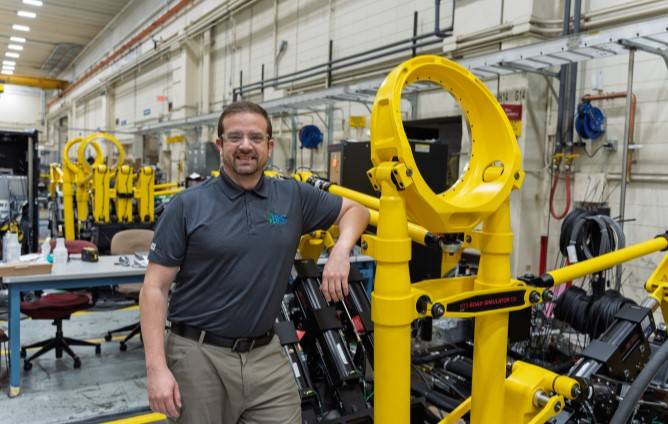
Suspension Component Durability
Assess and validate the components of an axle and suspension to ensure durability design targets are met and warranty costs are minimized.
Durability assessment of automotive suspension components is essential to ensure vehicles withstand long-term dynamic loading, harsh environments, and diverse road conditions. OEMs, tier-one suppliers, and independent test labs perform these evaluations to validate design robustness, reduce warranty risk, and meet regulatory or customer performance expectations. Rigorous durability testing helps engineers identify fatigue-prone areas early, optimize materials and geometries, and correlate laboratory loads with real-world duty cycles to deliver safer, more reliable suspension systems.
Test Methods
Suspension component durability testing follows global standards specifying multi-axis loading, displacement and force control, and accelerated fatigue cycles that simulate real-world operating conditions. Test methods include constant-amplitude fatigue, block-cycle loading, and spectrum-based procedures derived from road or proving-ground data. Environmental conditioning may replicate temperature extremes, corrosion, or moisture exposure. Components such as control arms, bushings, knuckles, and subframes are subjected to precise, repeatable motion and force profiles that capture multi-degree-of-freedom responses, frictional behavior, and structural stresses. High-fidelity servohydraulic actuators and modular test rigs reproduce complex load paths while ensuring consistency across tests. Real-time data acquisition monitors force, displacement, torque, and vibration to evaluate performance degradation and fatigue life. These laboratory-based methods allow engineers to validate designs, correlate with field data, optimize materials, and confirm compliance with SAE, ISO, and OEM-specific durability standards.
Test Results
Suspension component durability data helps OEMs and test organizations validate structural integrity, establish fatigue life, and confirm compliance with internal or industry standards. Results guide design optimization, material selection, and geometry improvements. Engineers use this data to correlate laboratory tests with road events, predict field performance, reduce warranty exposure, and ensure reliable operation across diverse vehicle applications and environments.
MTS Product Solutions
MTS offers a comprehensive portfolio for suspension component durability testing, combining high-performance servohydraulic systems, industry-leading FlexTest® controllers, and precision modular components. These solutions deliver exceptional load fidelity, multi-axis control, and efficient simulation of real-world road events. RPC-based road load replication ensures accurate correlation with proving-ground conditions, while MTS actuators, software, and load frames provide the reliability and configurability required for rapid test deployment, long-term durability programs, and evolving test requirements.
Test Methods
Suspension component durability testing follows global standards specifying multi-axis loading, displacement and force control, and accelerated fatigue cycles that simulate real-world operating conditions. Test methods include constant-amplitude fatigue, block-cycle loading, and spectrum-based procedures derived from road or proving-ground data. Environmental conditioning may replicate temperature extremes, corrosion, or moisture exposure. Components such as control arms, bushings, knuckles, and subframes are subjected to precise, repeatable motion and force profiles that capture multi-degree-of-freedom responses, frictional behavior, and structural stresses. High-fidelity servohydraulic actuators and modular test rigs reproduce complex load paths while ensuring consistency across tests. Real-time data acquisition monitors force, displacement, torque, and vibration to evaluate performance degradation and fatigue life. These laboratory-based methods allow engineers to validate designs, correlate with field data, optimize materials, and confirm compliance with SAE, ISO, and OEM-specific durability standards.
Test Results
Suspension component durability data helps OEMs and test organizations validate structural integrity, establish fatigue life, and confirm compliance with internal or industry standards. Results guide design optimization, material selection, and geometry improvements. Engineers use this data to correlate laboratory tests with road events, predict field performance, reduce warranty exposure, and ensure reliable operation across diverse vehicle applications and environments.
MTS Product Solutions
MTS offers a comprehensive portfolio for suspension component durability testing, combining high-performance servohydraulic systems, industry-leading FlexTest® controllers, and precision modular components. These solutions deliver exceptional load fidelity, multi-axis control, and efficient simulation of real-world road events. RPC-based road load replication ensures accurate correlation with proving-ground conditions, while MTS actuators, software, and load frames provide the reliability and configurability required for rapid test deployment, long-term durability programs, and evolving test requirements.
- FlexTest Controllers provide precise multi-axis control for complex suspension durability tests, enabling accurate execution of force and displacement profiles. Their high-speed processing, safety features, and RPC integration ensure reliable simulation of real-world road loads and efficient test throughput.
- Modular Components for Automotive Test Applications let users create tightly integrated, cost-efficient automotive component and sub-system test stands that easily reconfigure as requirements evolve. Precision actuators, controllers, RPC Connect software, and load-bearing elements deliver high-quality performance consistent with advanced custom MTS rigs.
- Damper Durability Test Systems apply millions of controlled, multi-axis load cycles to evaluate fatigue life and performance stability. High-fidelity actuators, advanced controls, and environmental simulation capabilities replicate real-world duty cycles to ensure long-term damper reliability and reduced warranty risk.
- Elastomer Test Systems characterize the fatigue life, dynamic stiffness, and nonlinear behaviors of bushings and mounts used in suspension assemblies. Their high-force actuators, low-friction bearings, and accurate control help engineers understand elastomer performance under varying loads, speeds, and environmental conditions.
- Landmark® Servohydraulic Test Systems provide high-stiffness load frames and precise servohydraulic actuation for fatigue and durability testing of suspension components. Their robustness, configurability, and long service life support demanding multi-axis durability programs, enabling accurate replication of operational loads and accelerated evaluation of component longevity.