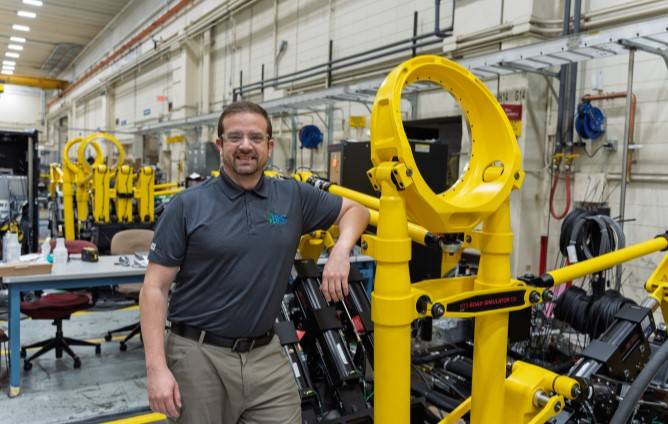
Suspension System Set-up, Tuning & Evaluation
Perform suspension system set-up, tuning and vehicle-level evaluation with only a subsystem of parts in a laboratory environment.
Laboratory-based suspension system set-up and tuning allow engineers to evaluate subsystem performance before full-vehicle integration. OEMs, Tier 1 suppliers, and research institutions use these controlled tests to optimize ride, handling, damping, and steering characteristics while isolating specific components. Testing in a lab environment reduces risk, shortens development cycles, and enables precise adjustments to spring rates, damper curves, bushing compliance, and anti-roll bar stiffness. These evaluations support robust vehicle dynamics and NVH performance prior to proving-ground validation.
Test Methods
Suspension system set-up, tuning, and evaluation rely on standards that define procedures for quasi-static, dynamic, and hybrid subsystem testing. Engineers measure ride frequency, damping ratios, steering response, roll stiffness, and suspension compliance under representative loads. MTS solutions allow accurate replication of vehicle-level loading in the lab using only the subsystem of interest. Hybrid Simulation with physical damper and/or steering systems under test enables virtual vehicle and subsystem modeling in real-time while applying physical actuation to dampers or steering assemblies. Multi-axis actuation, displacement/force-controlled inputs, and frequency sweeps help quantify component interactions, damping characteristics, and response to transient events. These methods allow correlation to full-vehicle behavior, optimization of suspension tuning, and evaluation of NVH contributions in a repeatable, laboratory-controlled setting.
Test Results
Data from suspension system set-up and tuning informs engineers about damping curves, ride frequencies, roll and pitch behavior, and steering response. OEMs and suppliers use these results to optimize subsystem characteristics, refine suspension components, validate simulation models, reduce vehicle development risk, and ensure the intended balance between ride comfort, handling precision, and NVH performance.
MTS Product Solutions
MTS offers advanced solutions for laboratory-based suspension tuning and evaluation, including high-fidelity Hybrid Simulation with mHIL Damper and mHIL Steer, and FlexTest® controllers. These systems provide precise, multi-axis actuation, real-time simulation of vehicle dynamics, and seamless integration of physical and virtual components. Engineers can evaluate dampers, steering, and suspension subsystems in isolation while capturing performance data that correlates to full-vehicle behavior, enabling accelerated development and optimized ride, handling, and NVH outcomes.
Test Methods
Suspension system set-up, tuning, and evaluation rely on standards that define procedures for quasi-static, dynamic, and hybrid subsystem testing. Engineers measure ride frequency, damping ratios, steering response, roll stiffness, and suspension compliance under representative loads. MTS solutions allow accurate replication of vehicle-level loading in the lab using only the subsystem of interest. Hybrid Simulation with physical damper and/or steering systems under test enables virtual vehicle and subsystem modeling in real-time while applying physical actuation to dampers or steering assemblies. Multi-axis actuation, displacement/force-controlled inputs, and frequency sweeps help quantify component interactions, damping characteristics, and response to transient events. These methods allow correlation to full-vehicle behavior, optimization of suspension tuning, and evaluation of NVH contributions in a repeatable, laboratory-controlled setting.
Test Results
Data from suspension system set-up and tuning informs engineers about damping curves, ride frequencies, roll and pitch behavior, and steering response. OEMs and suppliers use these results to optimize subsystem characteristics, refine suspension components, validate simulation models, reduce vehicle development risk, and ensure the intended balance between ride comfort, handling precision, and NVH performance.
MTS Product Solutions
MTS offers advanced solutions for laboratory-based suspension tuning and evaluation, including high-fidelity Hybrid Simulation with mHIL Damper and mHIL Steer, and FlexTest® controllers. These systems provide precise, multi-axis actuation, real-time simulation of vehicle dynamics, and seamless integration of physical and virtual components. Engineers can evaluate dampers, steering, and suspension subsystems in isolation while capturing performance data that correlates to full-vehicle behavior, enabling accelerated development and optimized ride, handling, and NVH outcomes.
- FlexTest Controllers provide high-bandwidth, multi-channel control for suspension subsystem evaluation. Their modular design enables accurate replication of force, displacement, and hybrid signals for damper, steering, and linkage tests, ensuring repeatable, reliable tuning of ride and handling characteristics.
- Hybrid Simulation: mHIL Damper couples physical dampers with real-time virtual vehicle models, allowing engineers to tune damping characteristics under simulated driving conditions. It enables rapid evaluation of subsystem responses while isolating damper behavior from full-vehicle complexity.
- Hybrid Simulation: mHIL Steer combines physical steering components with real-time virtual vehicle dynamics. Engineers can evaluate steering response, feedback, and subsystem interactions under controlled laboratory conditions, providing actionable data to optimize steering feel, handling balance, and NVH before full-vehicle testing.