Axle / Suspension Subsystem Durability
Assess and validate axle and suspension durability to ensure that design targets are met and warranty costs are minimized.
Evaluating axle and suspension durability is essential for confirming structural robustness, fatigue resistance, and long-term ride and handling performance. OEMs, Tier 1 suppliers, and proving-ground laboratories conduct these tests to identify potential failures early, refine subsystem designs, and mitigate downstream warranty exposure. By subjecting axles, control arms, bushings, and joint assemblies to representative multi-axis loading, engineers ensure that critical chassis components can withstand millions of cycles of real-world driving across diverse global road conditions.
Test Methods
Axle and suspension durability testing relies on reproducing measured road loads to evaluate fatigue behavior, joint integrity, and kinematic performance of key chassis subsystems. Real-world forces, motions, and accelerations are acquired through instrumented proving-ground campaigns, then condensed into accelerated durability drive files suitable for laboratory playback. In the lab, multi-axis rigs apply these files into the spindle or suspension interfaces to replicate rough-road, pothole, curb-strike, and high-load events with high repeatability.
Global standards prescribe methodologies for acquiring representative road loads, generating condensed spectra, and executing controlled durability simulations. Engineers frequently combine physical rigs with hybrid simulation to represent loading events or subsystem behaviors beyond mechanical bandwidth, improving correlation and extending the range of test scenarios. These methods—accelerated road-load reproduction, block-cycle durability, rough-road replication, and hybrid simulation—support comprehensive subsystem validation prior to vehicle-level integration.
Test Results
Axle and suspension durability tests generate fatigue-life predictions, structural stress and strain insights, and subsystem interaction data. Automotive OEMs and research institutions use these results to validate digital models, refine component geometries, optimize materials and joints, improve correlation across development stages, and reduce warranty risk by confirming that subsystems meet global durability performance targets.
MTS Product Solutions
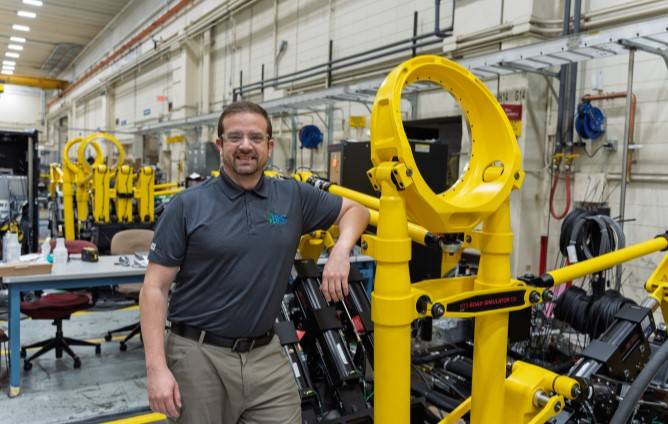
MTS provides a comprehensive suite of axle and suspension durability testing solutions built around high-fidelity road-load reproduction, advanced controls, and flexible hybrid simulation capabilities. Model 329 spindle-coupled systems configured for axle testing deliver precise multi-axis input through critical suspension interfaces, supported by FlexTest® controllers and RPC® Connect software. Integrated transducers, hydraulics, and modular fixturing help engineers efficiently execute accurate, repeatable durability programs across a broad range of axle and suspension architectures.
Test Methods
Axle and suspension durability testing relies on reproducing measured road loads to evaluate fatigue behavior, joint integrity, and kinematic performance of key chassis subsystems. Real-world forces, motions, and accelerations are acquired through instrumented proving-ground campaigns, then condensed into accelerated durability drive files suitable for laboratory playback. In the lab, multi-axis rigs apply these files into the spindle or suspension interfaces to replicate rough-road, pothole, curb-strike, and high-load events with high repeatability.
Global standards prescribe methodologies for acquiring representative road loads, generating condensed spectra, and executing controlled durability simulations. Engineers frequently combine physical rigs with hybrid simulation to represent loading events or subsystem behaviors beyond mechanical bandwidth, improving correlation and extending the range of test scenarios. These methods—accelerated road-load reproduction, block-cycle durability, rough-road replication, and hybrid simulation—support comprehensive subsystem validation prior to vehicle-level integration.
Test Results
Axle and suspension durability tests generate fatigue-life predictions, structural stress and strain insights, and subsystem interaction data. Automotive OEMs and research institutions use these results to validate digital models, refine component geometries, optimize materials and joints, improve correlation across development stages, and reduce warranty risk by confirming that subsystems meet global durability performance targets.
MTS Product Solutions
MTS provides a comprehensive suite of axle and suspension durability testing solutions built around high-fidelity road-load reproduction, advanced controls, and flexible hybrid simulation capabilities. Model 329 spindle-coupled systems configured for axle testing deliver precise multi-axis input through critical suspension interfaces, supported by FlexTest® controllers and RPC® Connect software. Integrated transducers, hydraulics, and modular fixturing help engineers efficiently execute accurate, repeatable durability programs across a broad range of axle and suspension architectures.
- Model 329 Spindle-Coupled Road Simulators in axle configurations apply multiaxial road loads directly through suspension and axle interfaces, enabling accurate reproduction of rough-road and impact events to evaluate fatigue, joint durability, and subsystem interactions under tightly controlled, repeatable laboratory conditions.
- Automotive Modular Components provide configurable, high-stiffness fixturing and interfaces tailored for diverse axle and suspension architectures, allowing engineers to efficiently set up accurate, repeatable durability simulations while maintaining proper kinematics and boundary conditions across a variety of test articles.
- FlexTest Controllers controllers deliver high-bandwidth, multichannel control essential for executing complex axle and suspension durability drive files, ensuring stable actuator coordination, accurate force and motion reproduction, and reliable hybrid operation during demanding multi-axis fatigue evaluations.
- RPC Connect Software accelerates durability test development by processing road-load data, generating condensed drive files, and optimizing correlation loops, enabling precise reproduction of axle and suspension loading events and supporting hybrid workflows that extend test realism and coverage.
- Hybrid Simulation: Full Vehicle HSRC integrates physical axle or suspension rigs with real-time virtual road or subsystem models, expanding the range of testable events beyond rig bandwidth and enhancing durability realism, correlation accuracy, and coverage of extreme loading scenarios.
- Hybrid Simulation: Vehicle Bus Integration enables communication between physical durability rigs and vehicle electronic control modules, allowing earlier evaluation of mechatronic interactions and improving subsystem durability insight when full prototype hardware is limited or unavailable.
- SWIFT® Evo Wheel Force Transducers provide high-accuracy, high-bandwidth wheel force and moment measurements essential for road-load data acquisition and correlation, improving the fidelity of axle and suspension durability simulations and supporting robust proving-ground and laboratory test programs.
- Series 295 Hydraulic Service Manifolds deliver stable, responsive hydraulic distribution for multi-actuator axle and suspension test rigs, offering advanced flow and pressure management that enhances system reliability, uptime, and control performance during demanding durability simulations.
- SilentFlo™ 515 & 525 Hydraulic Power Units supply efficient, low-noise hydraulic power ideal for multi-actuator durability stands, providing precise pressure control, high reliability, and service-friendly operation that supports long-duration axle and suspension fatigue programs.