Transmission Characterization
Assess torque capacity, shift quality, efficiency, and thermal behavior of automatic, manual, and dual-clutch transmissions
Understanding transmission performance is critical for vehicle efficiency, drivability, and reliability. Engineers assess torque capacity, shift quality, efficiency, and thermal behavior of automatic, manual, and dual-clutch transmissions. OEMs, suppliers, and independent test laboratories conduct these evaluations to ensure powertrain compatibility, optimize gear ratios, and meet regulatory and warranty requirements across diverse vehicle platforms and operating conditions.
Test Methods
Transmission characterization involves applying controlled torque, speed, and load profiles to evaluate performance under realistic operating conditions. Test systems measure input and output torque, speed, gear engagement times, and thermal response across multiple operating points. Endurance, efficiency, and transient load profiles replicate city driving, highway cruising, and high-load scenarios. Multi-axis actuation and modular fixtures allow testing of different transmission types and configurations. SAE and ISO practices guide measurement protocols, repeatability, and calibration standards, providing consistent, comparable performance data. Instrumentation captures torque ripple, shift smoothness, and energy losses to support design optimization and regulatory compliance while minimizing reliance on full-vehicle testing.
Test Results
Transmission characterization results provide torque, efficiency, shift quality, and thermal performance metrics. Manufacturers, test labs, and research institutions use these insights to optimize designs, validate simulation models, ensure component durability, and confirm compliance with efficiency and performance standards before vehicle integration.
MTS Product Solutions
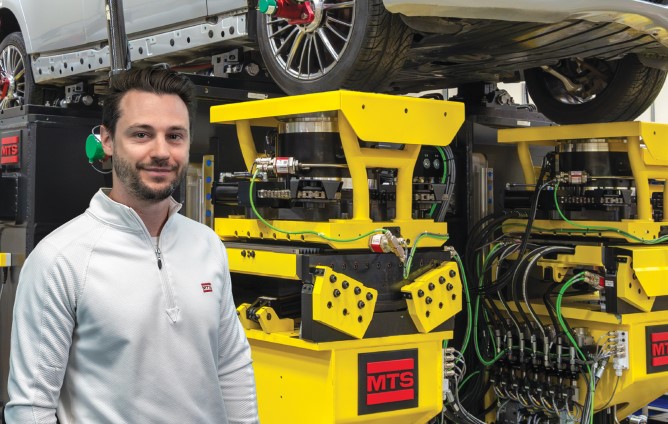
MTS transmission test systems provide precise torque and speed control to evaluate performance across a wide range of operating conditions. Modular components, advanced controllers, and software enable repeatable testing of multiple transmission types, while hydraulic power and distribution systems maintain stable, accurate test conditions for reliable characterization and accelerated development cycles.
Test Methods
Transmission characterization involves applying controlled torque, speed, and load profiles to evaluate performance under realistic operating conditions. Test systems measure input and output torque, speed, gear engagement times, and thermal response across multiple operating points. Endurance, efficiency, and transient load profiles replicate city driving, highway cruising, and high-load scenarios. Multi-axis actuation and modular fixtures allow testing of different transmission types and configurations. SAE and ISO practices guide measurement protocols, repeatability, and calibration standards, providing consistent, comparable performance data. Instrumentation captures torque ripple, shift smoothness, and energy losses to support design optimization and regulatory compliance while minimizing reliance on full-vehicle testing.
Test Results
Transmission characterization results provide torque, efficiency, shift quality, and thermal performance metrics. Manufacturers, test labs, and research institutions use these insights to optimize designs, validate simulation models, ensure component durability, and confirm compliance with efficiency and performance standards before vehicle integration.
MTS Product Solutions
MTS transmission test systems provide precise torque and speed control to evaluate performance across a wide range of operating conditions. Modular components, advanced controllers, and software enable repeatable testing of multiple transmission types, while hydraulic power and distribution systems maintain stable, accurate test conditions for reliable characterization and accelerated development cycles.
- Transmission Test Systems measure input/output torque, speed, and efficiency while simulating real-world driving conditions. They support automatic, manual, and dual-clutch transmissions, enabling detailed performance evaluation, thermal response testing, and shift quality assessment under repeatable lab conditions.
- Modular Components for Automotive Test Applications provide flexible fixturing and actuator integration for transmission testing. They allow rapid reconfiguration for different transmission types and test protocols, supporting consistent, repeatable characterization across multiple designs.
- FlexTest® Controllers deliver high-bandwidth, closed-loop control of torque, speed, and displacement. Their precision ensures accurate replication of transmission operating conditions and synchronization with measurement systems for reliable performance evaluation.