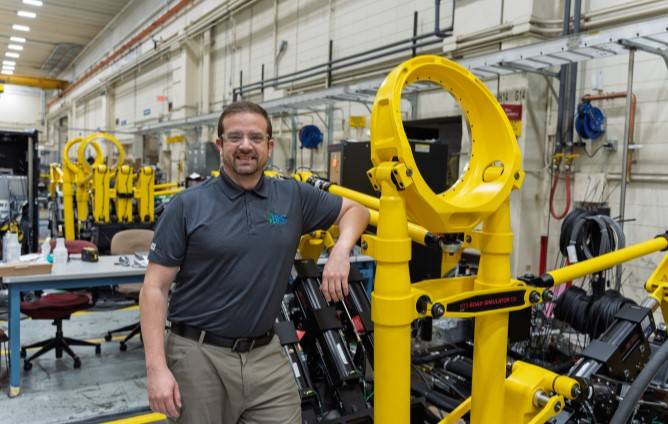
Full Vehicle Noise & Vibration Transmissibility
Investigate the sources, transmission paths and magnitude of various noise, vibration, buzz, squeak and rattle phenomena.
Measuring full-vehicle noise and vibration transmissibility is essential for understanding how road inputs propagate through the suspension, body, and interior, affecting ride comfort and perceived quality. OEMs, suppliers, and NVH research labs perform these evaluations to isolate root causes of noise, buzz, squeak, and rattle concerns. These investigations help engineers refine structure-borne and airborne paths, improve mount and bushing designs, and ensure competitive noise and vibration performance across global markets.
Test Methods
Industry methods for evaluating full-vehicle noise and vibration transmissibility follow global SAE and ISO practices that define how vibration, acceleration, force, and interior sound pressure must be measured and analyzed. These standards prescribe controlled excitation at the tire patches, structured acquisition of body and cabin responses, and frequency-based evaluation of transfer-path behavior. Proving-ground measurements on various road surfaces are often collected first, then replicated in the laboratory using tire-coupled road simulators or specialized ride-comfort roadway systems. These systems apply precise vertical and longitudinal road-profile inputs—such as cleats, rough surfaces, impact events, and low-level broadband vibrations—to study how excitations propagate through suspension, body, and interior structures. Techniques include vibration transmissibility mapping, modal response characterization, transfer-path analysis, and evaluation of structure-borne noise contributors under repeatable laboratory conditions.
Test Results
Noise and vibration transmissibility data help manufacturers identify dominant excitation sources, quantify transfer paths, and evaluate component-to-cabin coupling. These insights guide improvements to mounts, bushings, body stiffness, and isolation strategies. Test labs and research groups use these results to validate simulation models, benchmark competitive vehicles, optimize subsystem design, and ensure interior comfort targets are achieved before production release.
MTS Product Solutions
MTS provides an advanced portfolio of NVH road-simulation solutions designed to accurately reproduce road-induced vibrations in a controlled environment. Model 320 systems and Flat-Trac® Comfort Roadways offer exceptionally smooth, repeatable tire-coupled excitation ideal for transmissibility studies. FlexTest® controllers and RPC® Connect software deliver precise multichannel control and drive-file optimization, while robust hydraulic distribution and power units ensure stable, quiet operation—critical for high-fidelity NVH investigations.
Test Methods
Industry methods for evaluating full-vehicle noise and vibration transmissibility follow global SAE and ISO practices that define how vibration, acceleration, force, and interior sound pressure must be measured and analyzed. These standards prescribe controlled excitation at the tire patches, structured acquisition of body and cabin responses, and frequency-based evaluation of transfer-path behavior. Proving-ground measurements on various road surfaces are often collected first, then replicated in the laboratory using tire-coupled road simulators or specialized ride-comfort roadway systems. These systems apply precise vertical and longitudinal road-profile inputs—such as cleats, rough surfaces, impact events, and low-level broadband vibrations—to study how excitations propagate through suspension, body, and interior structures. Techniques include vibration transmissibility mapping, modal response characterization, transfer-path analysis, and evaluation of structure-borne noise contributors under repeatable laboratory conditions.
Test Results
Noise and vibration transmissibility data help manufacturers identify dominant excitation sources, quantify transfer paths, and evaluate component-to-cabin coupling. These insights guide improvements to mounts, bushings, body stiffness, and isolation strategies. Test labs and research groups use these results to validate simulation models, benchmark competitive vehicles, optimize subsystem design, and ensure interior comfort targets are achieved before production release.
MTS Product Solutions
MTS provides an advanced portfolio of NVH road-simulation solutions designed to accurately reproduce road-induced vibrations in a controlled environment. Model 320 systems and Flat-Trac® Comfort Roadways offer exceptionally smooth, repeatable tire-coupled excitation ideal for transmissibility studies. FlexTest® controllers and RPC® Connect software deliver precise multichannel control and drive-file optimization, while robust hydraulic distribution and power units ensure stable, quiet operation—critical for high-fidelity NVH investigations.
- Model 320 Tire-Coupled Road Simulators reproduce vertical and longitudinal tire inputs with exceptional smoothness and control, enabling detailed evaluation of noise and vibration transfer paths. Their tire-coupled interface ensures realistic loading, high repeatability, and precise characterization of interior acoustic and structural responses.
- Flat-Trac Comfort Roadways use precision-machined surfaces and controlled vertical actuation to replicate ride-comfort inputs with outstanding smoothness. They support transmissibility studies by generating low-noise, repeatable road excitations ideal for isolating structure-borne noise contributors and evaluating vehicle ride-comfort performance.
- FlexTest Controllers provide the high-bandwidth, multichannel control essential for NVH road simulation. Their advanced algorithms, real-time computation, and stable closed-loop performance ensure accurate reproduction of subtle vibration inputs needed to evaluate noise transmission characteristics.
- RPC Connect Software streamlines NVH test development by processing road-load data, refining drive files, and executing correlation loops. Its advanced vibration-reproduction algorithms ensure smooth, precise excitation ideal for transmissibility studies and transfer-path investigations.
- Series 295 Hydraulic Service Manifolds deliver stable, low-noise hydraulic flow essential for NVH testing. Their precise pressure regulation and integrated safety features support smooth actuator performance and maintain consistent excitation quality during transmissibility evaluations.
- SilentFlo™ 515 & 525 Hydraulic Power Units provide clean, quiet hydraulic power ideal for NVH facilities. Their low acoustic signature and precise pressure control help ensure road simulators generate repeatable vibration inputs without contaminating interior noise measurements.